Manufacturing
Feature Trusses
Exterior
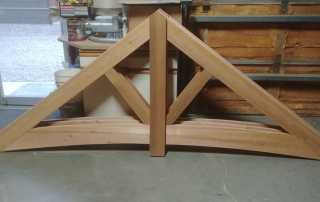
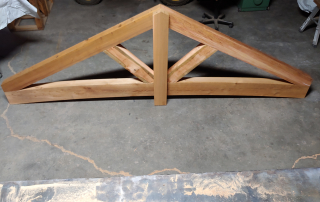
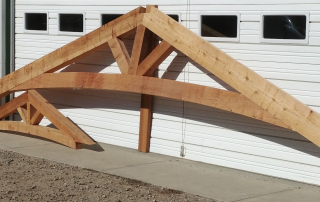
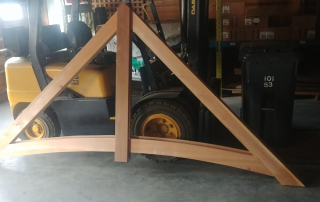
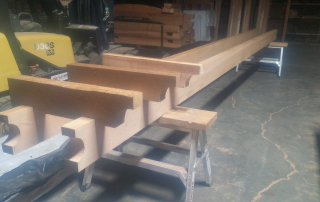
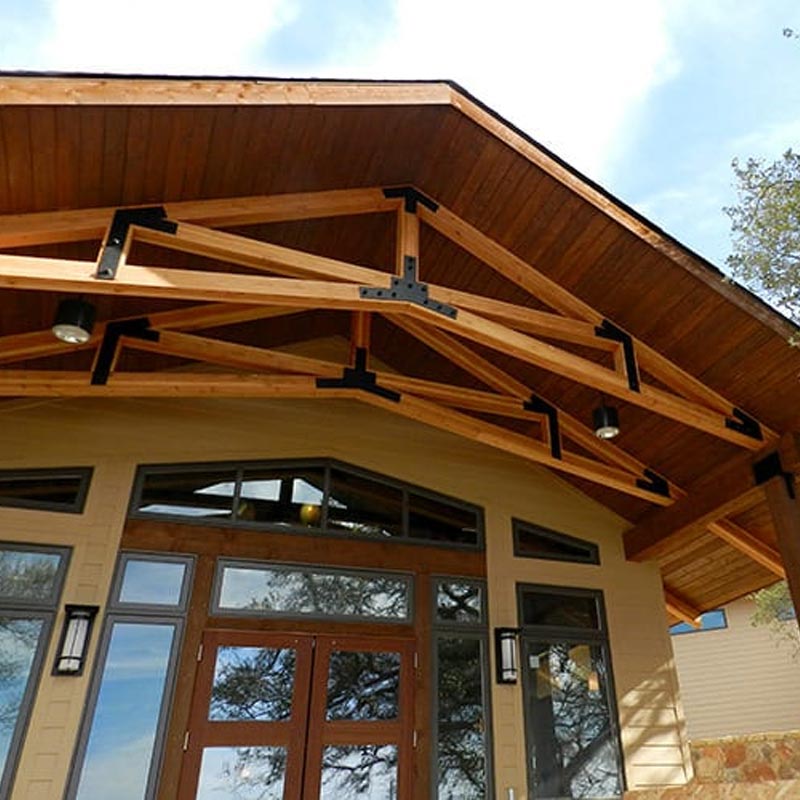
Feature (or gable) trusses are striking architectural elements that serve as exposed timber-framed focal points on the exterior of a home. They are commonly installed over open entryways, front-facing gable peaks, garage doors, or large windows to support overhanging roofs while enhancing both structural integrity and curb appeal.
Features
- Placement: Mounted on the flat surface of the gable end or offset slightly from the wall to create depth and shadow lines. In some designs, they are installed directly behind the fascia board for added dimension.
- Style: Popular designs include King Post, Queen Post, and Hammer Beam trusses.
- Function: Can be purely decorative or engineered to be load-bearing, providing both structural roof support and high-impact architectural appeal.
- Visual Impact: Creates a sense of grandeur while showcasing exceptional craftsmanship and timeless design.
- Materials: Commonly constructed from premium dimensional lumber or heavy, rough-sawn timbers.
Interior
Interior feature trusses are commonly used in vaulted ceilings, great rooms, entryways, and open porches, where they combine structural support with dramatic architectural character.
Benefits
- Draw the eye upward to emphasize vaulted ceilings.
- Add warmth and natural beauty through exposed timber.
- Create an open, spacious feel with enhanced ceiling volume.
Pro Tips for Your Project
- Ensure Proper Backing: Make sure there is sufficient structural backing above the soffit material to securely support the installation of brackets or trusses.
- Scale Matters: Choose brackets and trusses that are proportionate to the size of your home. An oversized truss can overwhelm a smaller cottage, while undersized elements may appear out of place on a larger home.
- Play with Dimension: Mount exterior trusses slightly away from the wall to create depth, defined shadow lines, and a more dynamic architectural appearance.
- Match the Architecture: Select a truss design that complements your home’s style. Sleek, geometric profiles suit modern homes, while ornate or traditionally crafted designs enhance classic and historical architecture.
Eave Braces
Decorative Eave Brackets
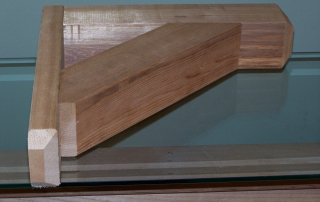
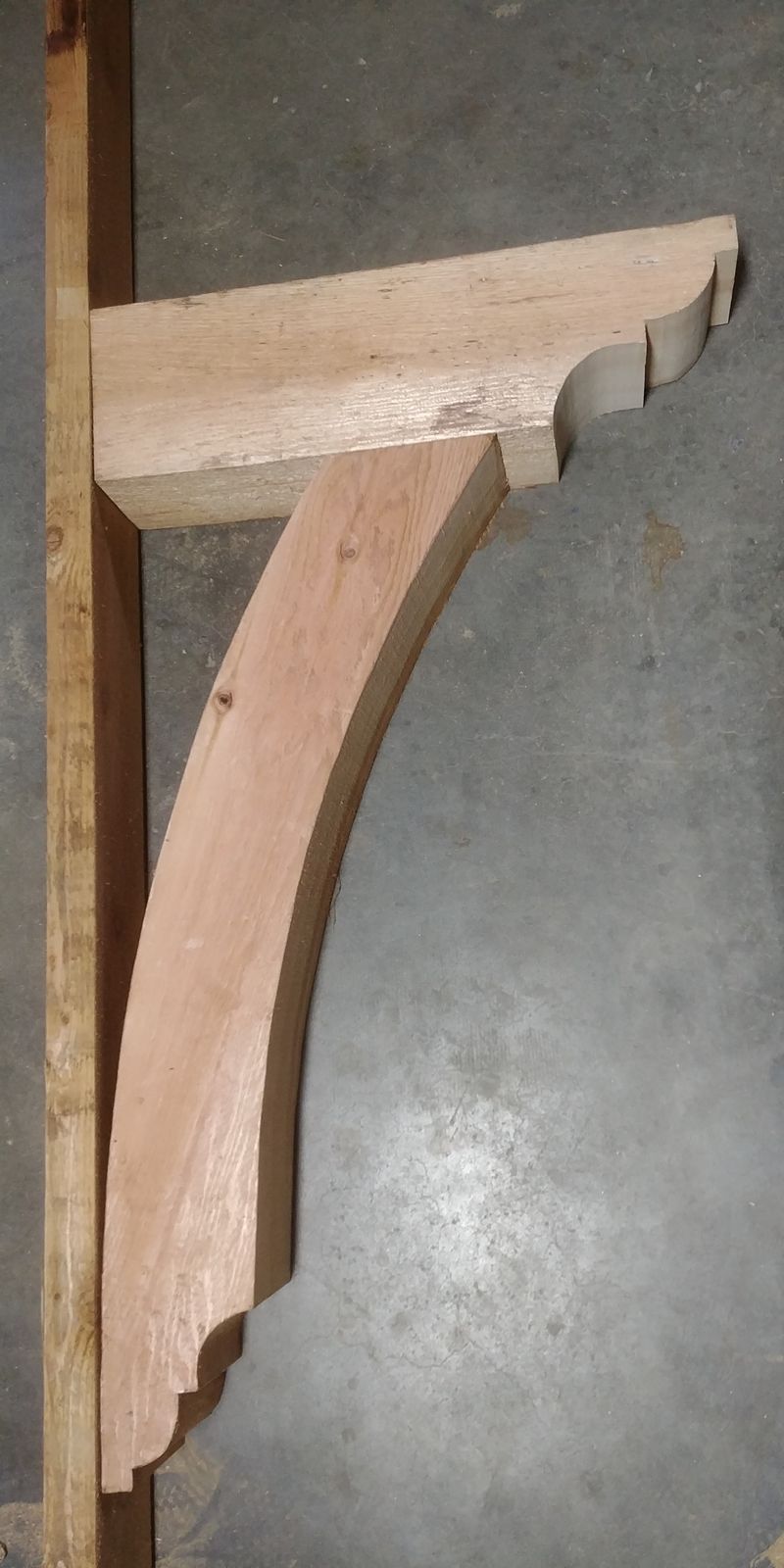
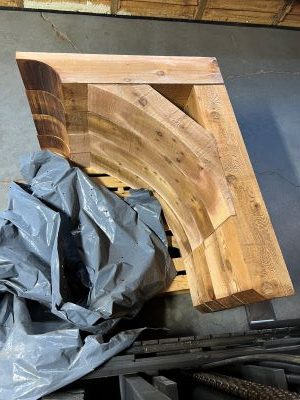
Decorative eave brackets (also known as knee braces or roof supports) are installed beneath roof overhangs to enhance architectural detail and create a distinctive exterior appearance. Available in a variety of styles and sizes, they can be customized to complement both traditional and modern homes while adding depth and visual character to gable ends, entryways, and porch rooflines.
Design & Specifications
- Key Measurements: Determine the soffit width (the distance from the wall to the back of the fascia), the length of the back leg in relation to the top beam, and the desired brace pitch (typically between 22.5° and 45°).
- Design Options: Choose from scalloped front profiles with mitered returns on the diagonal brace or clean, straight-cut designs for a more contemporary appearance.
- Placement: Exterior brackets are commonly installed in sets of 3–5 on end gables—typically one centered at the peak, with additional brackets positioned on the center left, center right, bottom left, and bottom right.
- Scale Matters: Select bracket dimensions that are proportionate to your home’s existing architectural features for a balanced, cohesive appearance.
- Material Options: Available in Full Sawn Rough Texture for a rustic look or Smooth (Dressed Lumber) for a clean, refined finish.
Pro Tips for Your Project
- Ensure Proper Backing: Verify that there is sufficient structural backing within the wall and above the soffit to securely support the installation of brackets or braces.
- Scale Matters: Choose brackets and trusses that are proportionate to the size of your home. An oversized truss can overwhelm a smaller cottage, while undersized elements may appear out of place on a larger home.
- Play with Dimension: Mount exterior brackets or trusses slightly away from the wall to create depth, defined shadow lines, and a more dynamic architectural appearance.
- Match the Architecture: Select a bracket or truss design that complements your home’s architectural style. Sleek, geometric profiles suit modern homes, while ornate or traditionally crafted designs enhance classic and historical exteriors.
Corbels
Decorative Corbels
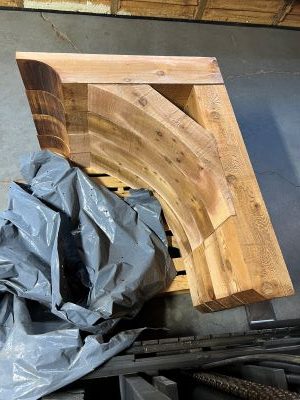
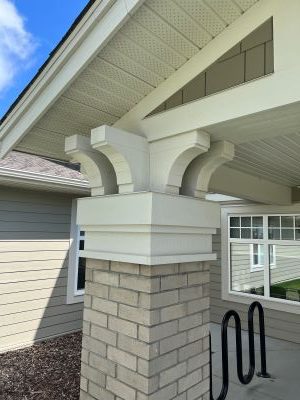
Decorative corbels are wooden brackets designed to enhance architectural features while providing visual support for a variety of interior and exterior applications. Available in a wide range of custom shapes and sizes, they add depth, character, and craftsmanship to bearing posts, soffits, arches, lookouts, and other architectural details.
Design & Specifications
- Key Measurements: Corbels are primarily decorative, with their size and proportions determined by the surrounding architectural elements.
- Design Options: Most corbels are crafted from large, solid pieces of wood and feature unique, project-specific profiles ranging from traditional to contemporary designs.
- Placement: Commonly installed on bearing posts, soffits, arches, lookouts, and other architectural focal points.
- Scale Matters: Select corbel dimensions that are proportionate to your home’s existing architectural features for a balanced, cohesive appearance.
- Material Options: Typically manufactured from large full-sawn timbers or by laminating multiple layers of wood together for added strength and design flexibility.
Design Tips
- Scale Matters: Choose corbels that are proportionate to the size and style of your home. Oversized corbels can overwhelm smaller spaces, while undersized designs may not provide the desired visual impact.
- Create Visual Balance: Position corbels evenly and consistently to frame architectural features and create a cohesive, symmetrical appearance.
- Match the Architecture: Select a corbel profile that complements your home’s architectural style. Clean, simple designs suit modern homes, while decorative or carved profiles enhance traditional and historic exteriors.
Pro-Tip
Knee Braces
Concept & Design
Common Applications
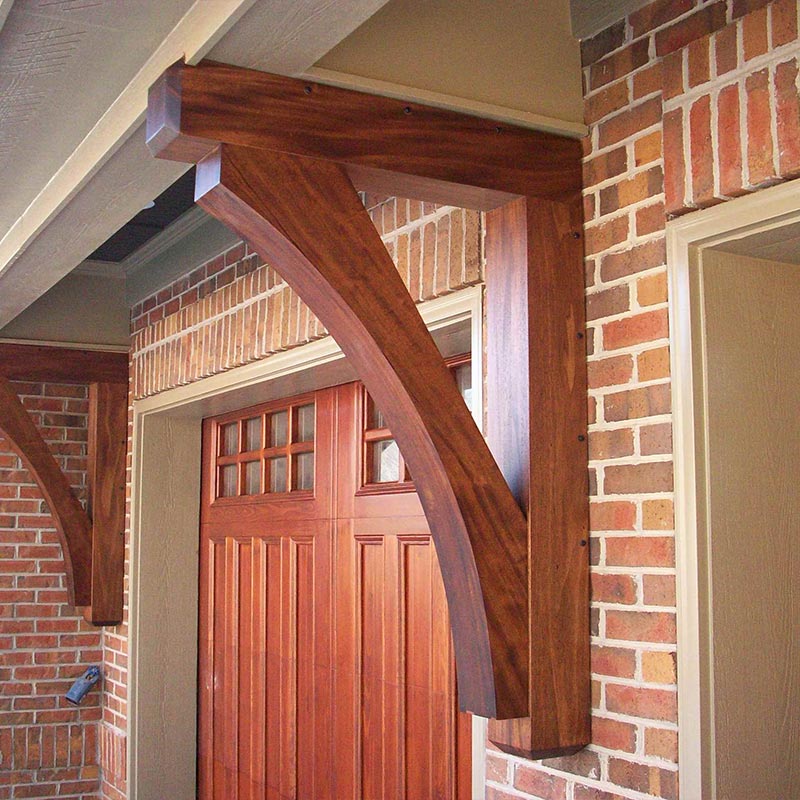
- Timber Framing & Post-and-Beam: Essential structural elements in barns, pavilions, and custom homes that rely on visible wood joinery.
- Exterior Architecture: Frequently used on front entries, covered porches, porticoes, and pergolas to provide both structural reinforcement and classic architectural appeal.
Scale
Proportionally, knee braces should visually complement the thickness of your posts and beams.
- Proportion: A brace should appear substantial enough to carry weight without looking spindly or bulky. For example, a 4" × 6" brace pairs well with a 6" × 6" post, while a 6" × 8" brace complements an 8" × 8" post.
- Overhead Clearance: When installed over interior doorways, covered porches, or decks, braces should not occupy more than half of the opening. Avoid restricting headroom or making the space feel visually enclosed.
Construction Tip
For added strength, notch the brace ½”-1” into the post and beam. Seal endgrain immediately to prevent checking.
Rafter Tails
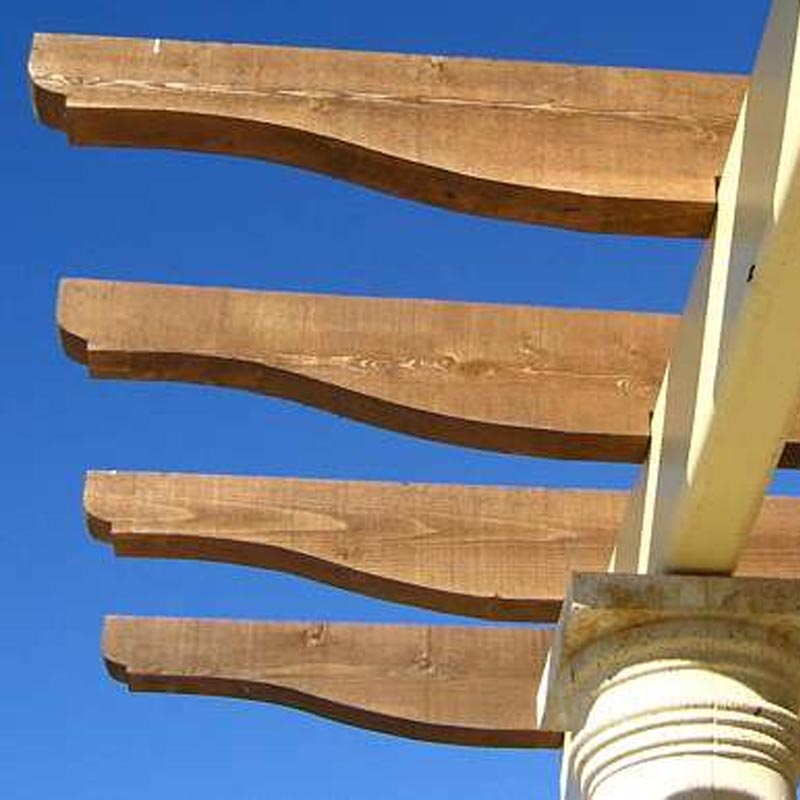
Decorative rafter tails are architectural extensions that add visual character to roof eaves, gables, and porches. They are heavily utilized to elevate the exterior aesthetic of a building, enhance structural authenticity, and complement specific classic and modern architectural styles.
Concept & Design
Common Applications
- Architectural Detailing & Curb Appeal: Acting as the “jewelry” of a roofline, decorative rafter tails break up long, flat roof edges while adding depth, shadow lines, and the distinctive character associated with high-end homes.
- Historical & Regional Styles: A defining feature of Craftsman, Arts and Crafts, Bungalow, Spanish Colonial, Swiss Chalet, and other traditional architectural styles.
- Outdoor Structures: Frequently incorporated into gazebos, freestanding pavilions, and garden pergolas to create a finished timber-frame appearance.
- Custom Accents & Entrances: Installed over entryways, porches, and garage doors to draw attention and establish a warm, welcoming focal point.
Pro Tips
For instance, if you are working with 2×8 rafters and 2×10 beams, the scale ratio is 4:5—meaning the beam’s design should be 20% larger than the rafter’s.
For repetitive cuts, create a single master template. Measuring once and tracing the profile onto each board ensures perfect consistency and saves time.
Custom Cutting
Precision Lumber Re-Sawing
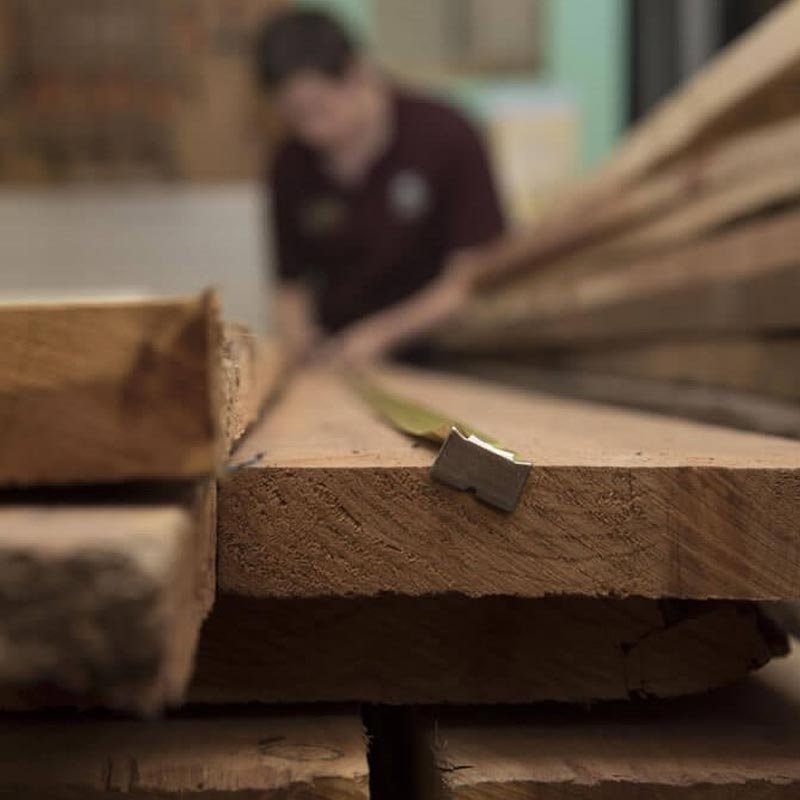
Get tailored precision lumber re-sawing in Lethbridge to meet your unique project requirements. We typically offer a 48-hour turnaround with a cutting tolerance of ±1/8″. Please book your cuts in advance and contact us for additional details.
Custom Cutting Specifications
- Turnaround: Typical turnaround time is 48 hours.
- Tolerance: Precision cutting with a tolerance of ±1/8″.
- Requirements: Advance booking is required to schedule custom cutting services.
Pro Tip: Bandsaw Finishing
Bandsaw cuts produce an exceptionally smooth finish. A light pass with 50-grit sandpaper quickly removes any surface fuzz while preserving the distinctive saw texture, which can become a unique architectural feature. Avoid planing the wood if you wish to maintain this natural texture, as planing will remove the bandsawn finish and reduce its visual character.